
Company background
Founded in 1979, the company originated from a neighborhood bakery operated by the local community. It has since evolved into a leading enterprise in the frozen food industry, offering diversified product lines such as quick-frozen tangyuan (glutinous rice balls), zongzi (sticky rice dumplings), dumplings, and Wuxi-style pastries. With extensive sales coverage and multiple production bases, the company ranks among the top players in its sector.
Facing challenges
The company currently operates under a “production-driven sales” model, where products are manufactured first, followed by sales personnel processing orders and arranging distribution based on customer demands. This operational approach has led to the following challenges in business management:
- The original business system is outdated and can only solve some business problems, and specific information such as product prices cannot be seen on the mobile phone, making it difficult to effectively implement mobile office.
- Sales reports often encounter situations where the reported quantity does not match the vehicle model, and there are serious disputes between sales and fleet personnel due to transportation issues.
- The manual statistical efficiency of sales, warehousing, finance and other business data is low, and it cannot be connected in real time. Management personnel cannot see the full picture of the business in a timely manner.
Effect value
- Enable seamless cross-platform business management integration between PC and mobile devices, facilitating effortless mobile office operations.
- Optimize delivery resource utilization by matching vehicle types to order volumes.
- Sales, warehousing, finance and other data – key integration, real-time control of the overall business situation.
Core application scenarios
Transportation and distribution management
The system optimizes vehicle-type matching based on order volumes to enhance delivery resource utilization. Administrators configure each vehicle type’s loading capacity in the backend while making all vehicle options available. When sales personnel submit orders, the system automatically validates cargo quantities against predefined thresholds: orders exceeding or falling below a vehicle’s capacity cannot be submitted until adjusted to align with compatible specifications. This intelligent matching mechanism achieves three operational improvements.
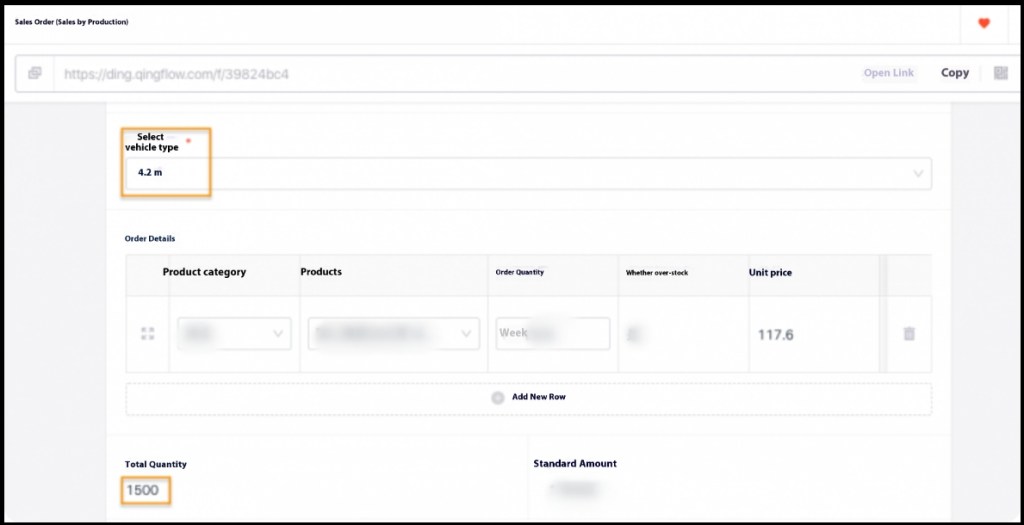
order management
| previously | previously, sales, warehouse, and financial data remained siloed across operational departments without integration. |
| now | By integrating and managing these businesses, relevant data can also be easily correlated, statistically analyzed, and analyzed. |
In addition, by utilizing automated data reports, customer orders and amounts can be managed in a unified manner. Whether it is the quantity of products sold, sales revenue, or payment status, they can all be viewed in real-time through the reports.


Financial management
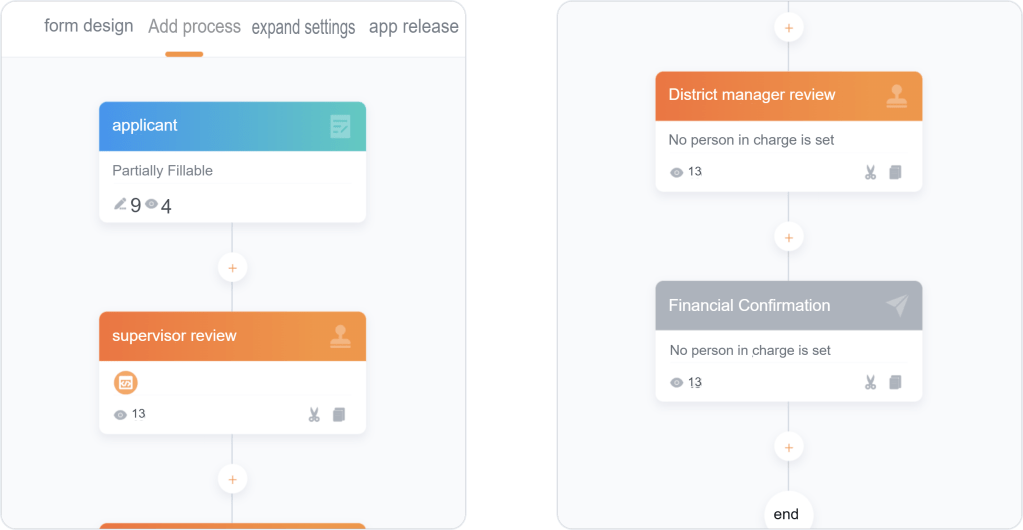
In the finance sector, as the company used to adopt a “production based sales” model, business personnel need to know the remaining amount of the customer’s advance payment. Of course, when the remaining amount is insufficient, they need to remind the customer to make the payment. Through powerful external connectivity, customer payment data can be captured in real-time from the corresponding financial software, ensuring the accuracy of payment and goods data. At the same time, the reimbursement of the company’s business personnel (such as transportation subsidies, fuel subsidies, conference expenses, advertising expenses, etc.) is also completed on it; After the staff fill out the corresponding reimbursement form, the system will automatically push it to the relevant person in charge for approval. After approval, the finance department will automatically transfer the corresponding expenses to the applicant’s account. Solved the problems of outdated business systems, data silos in sales, warehousing, finance and other business sectors, and vehicle transportation, while also improving development efficiency and achieving cost reduction and efficiency improvement for the enterprise.
 DIGITURBO